Sports & Fitness · Equipment, wearables & training gear

The best foam rollers of 2026

Five foam rollers ranked on one question: does the listing tell you how firm the roller is?

No third party ranks foam rollers, and the safety regulator has never recalled one. None of these five publishes a density figure either, so what separates them is how much of an answer each listing gives before you buy, and whether the rest of the listing still agrees with it when you check.

Last updated
August 17, 2026
How we rank: the specs each maker publishes, read across the listing's own surfaces, and the third-party register where the category has one.
§ 01 · Top 5 Rankings

Our top 5 picks for foam rollers

As an Amazon Associate I earn from qualifying purchases.

#1
THREE FIRMNESS LEVELS
Rollga LITE Foam Roller, 18 Inch
Zoom
Rollga

Rollga LITE Foam Roller, 18 Inch

9.1/10JellyReviews Score

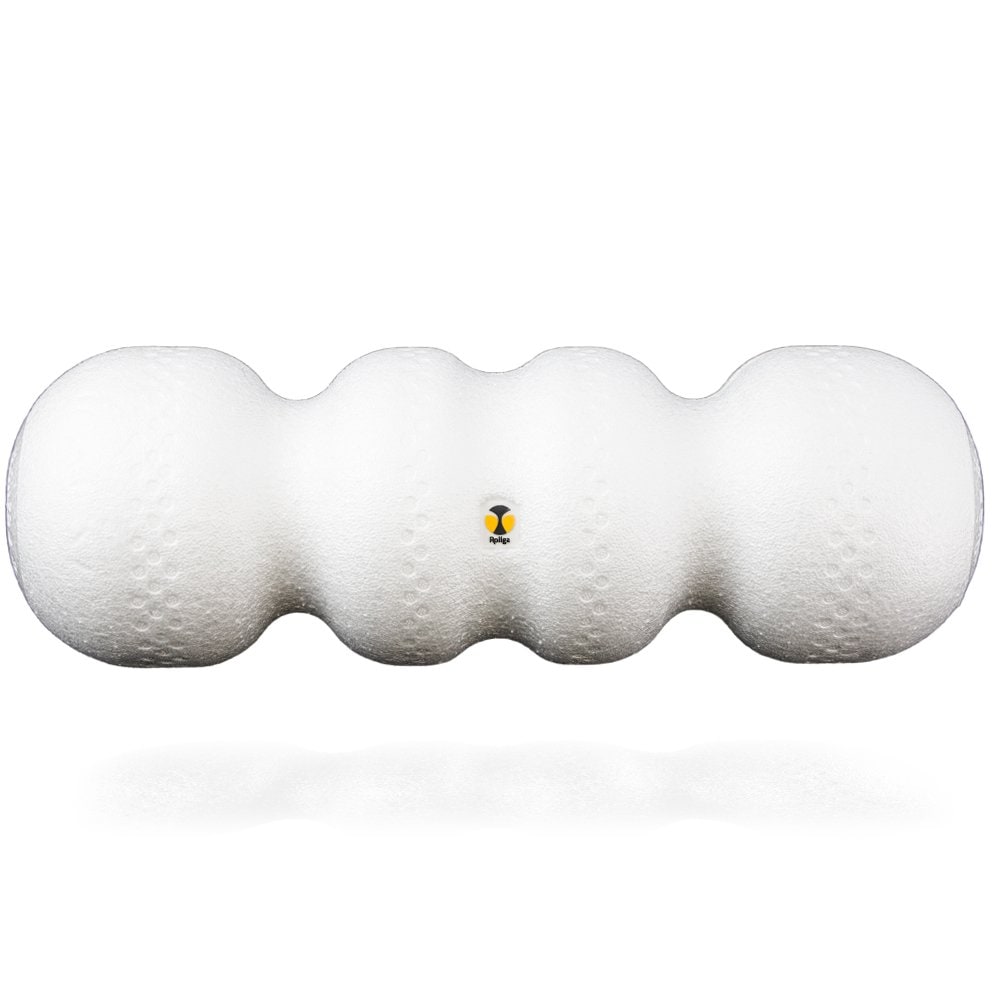
Rollga answers the firmness question with a decision tree instead of an adjective. Its gallery sends beginners and tender areas to LITE, all-around use to the standard version and deep work to the PRO, and bullet 6 places this one at 20 percent softer than that standard. It is the only decision tree on any of these five listings, and that is why it is first. The title reads High Density, which is the phrase Rollga uses for the foam in all three of its levels rather than a level of its own, so it is not the contradiction it looks like. The model name field is: it reads Rollga STANDARD on a product called LITE. The white finish in the photograph is a LITE color and appears in no other level's swatch row, so the field is the part that is wrong.
Pros
Publishes three firmness levels and who each is for: LITE for beginners or tender areas, standard for all-around use, PRO for deep work
Bullet 6 places this one in that range, at 20 percent softer than the standard Rollga
Contoured rather than round, with grooves the maker says keep pressure off the spine
The material field says expanded polypropylene and the artwork says closed-cell foam
Cons
The model name field reads Rollga STANDARD on a listing titled Rollga LITE
The 20 percent is measured against a roller this listing does not sell, so you cannot check it here
The gallery prints four clinical percentages footnoted to two published papers, and neither footnote says the study used a Rollga
Where to buy
Amazon
Check Price
We may earn a commission from this link.
#2
EPP, ITS FIRMEST GRADE
Yes4All EPP Foam Roller, 36 Inch
Zoom
Yes4All

Yes4All EPP Foam Roller, 36 Inch

8.9/10JellyReviews Score

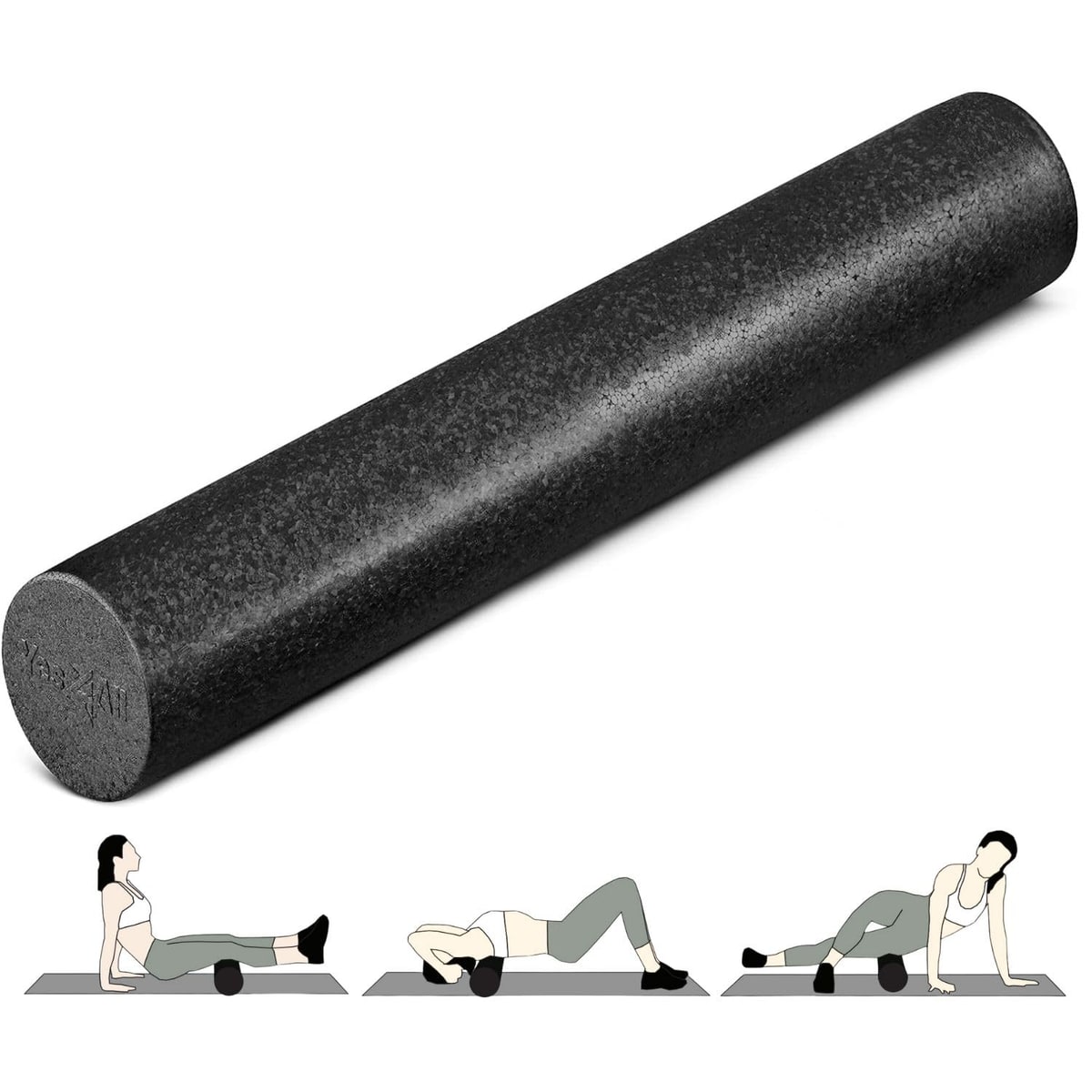
Yes4All grades its own range by material and says what each grade is for. PE is medium firm and aimed at beginners, EVA is firm and aimed at yoga and daily use, EPP is extra firm and aimed at athletes, and this listing is the EPP on every surface that names a grade. It also says the extra firm grade is intense pressure and hard at first, and points beginners at the medium firm grade instead. What costs it the top place is the firmness field, which reads Firm: that is the label Yes4All gives the grade below, so the listing names two different rungs of its own ladder. The load figure is 250 lb in two places and 300 lb in two others.

Pros
The gallery grades three materials by firmness and by who they suit: PE medium firm for beginners, EVA firm for intermediate, EPP extra firm for athletes. This listing is the EPP.
That panel calls the extra firm grade intense pressure and hard at first, and sends beginners to the medium firm grade instead
Every surface that names the material grade puts it in EPP: the title, the material field, the comparison table and the gallery ladder
Each of the four lengths has a stated use, and this one, 36 inches, is for larger areas and full-body support
Cons
The firmness field reads Firm, which is the name Yes4All's own ladder gives the EVA grade, on a listing whose other surfaces all say EPP and extra firm
Two load figures on one listing: 250 lb in bullet 6 and one gallery panel, 300 lb in another panel and in the comparison table
The comparison table's first column is this roller and the other four columns are different Yes4All products, so only the first column describes what you are buying
Where to buy
Amazon
Check Price
We may earn a commission from this link.
#3
THE SOFTER OF TWO
RumbleRoller Original, Midsize 22 Inch
Zoom
RumbleRoller

RumbleRoller Original, Midsize 22 Inch

8.5/10JellyReviews Score

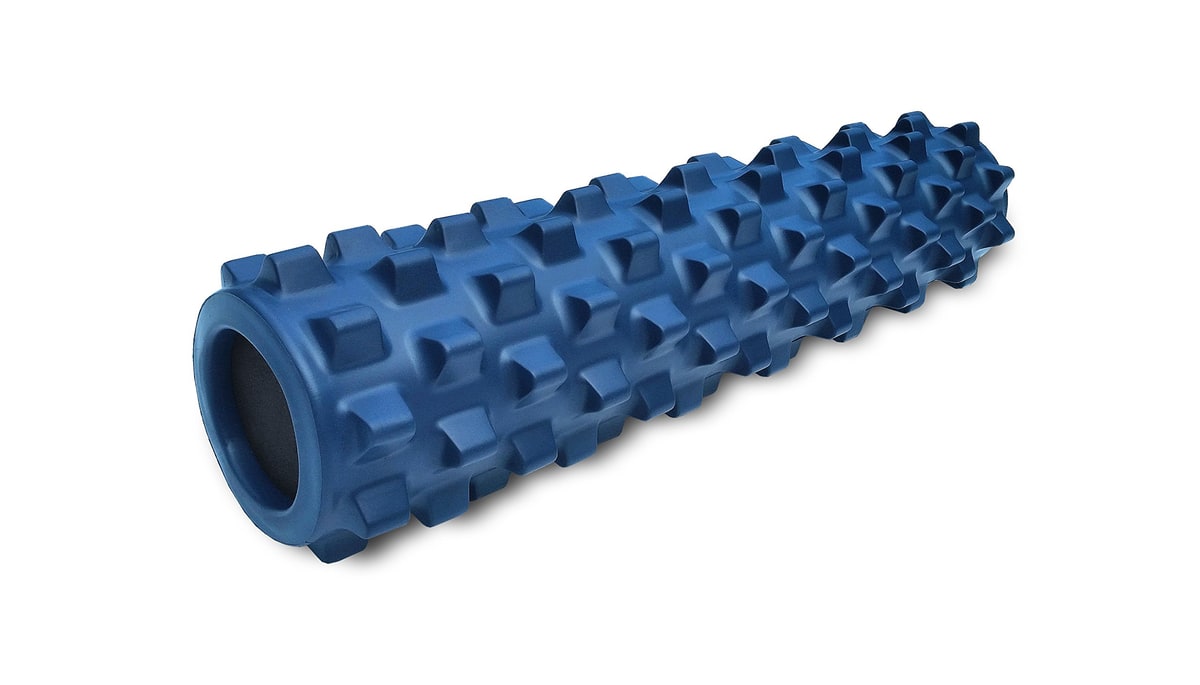
RumbleRoller names its two firmness levels in a gallery panel, Original in blue and XFIRM in black, and the title says this is the Original. The firmness field reads medium, which is where the softer of two belongs, so the answer holds up. What you do not get is any statement of who either level suits, so the range tells you this is the gentler bumpy roller without telling you whether gentler is what you want. It is better on size than on firmness: bullet 2 gives all three lengths a use and the A+ gives all three a diameter, which is more than the spec field manages at 22 inches.

Pros
The gallery photographs both firmness options together, Original in blue and XFIRM in black, and the title tells you this is the Original
The listing's own firmness field agrees with that and reads medium
Bullet 2 says what each of the three lengths is for, and the A+ copy gives all three a diameter, though it also puts the Compact at 13 inches where the size selector sells a 12
Bumps instead of a smooth surface, with a cross-section drawing of what they are meant to reach
Cons
Neither firmness level comes with a use case, so you learn this is the softer of two and not who it suits
The spec field gives the diameter as 22 inches, which is the length, while the A+ copy on the same listing says 5.5 inches
Two feature bullets in total, and the first one reads EVA/polyolefin
Where to buy
Amazon
Check Price
We may earn a commission from this link.
#4
Amazon Basics High-Density Foam Roller, 18 Inch
Zoom
Amazon Basics

Amazon Basics High-Density Foam Roller, 18 Inch

8.1/10JellyReviews Score

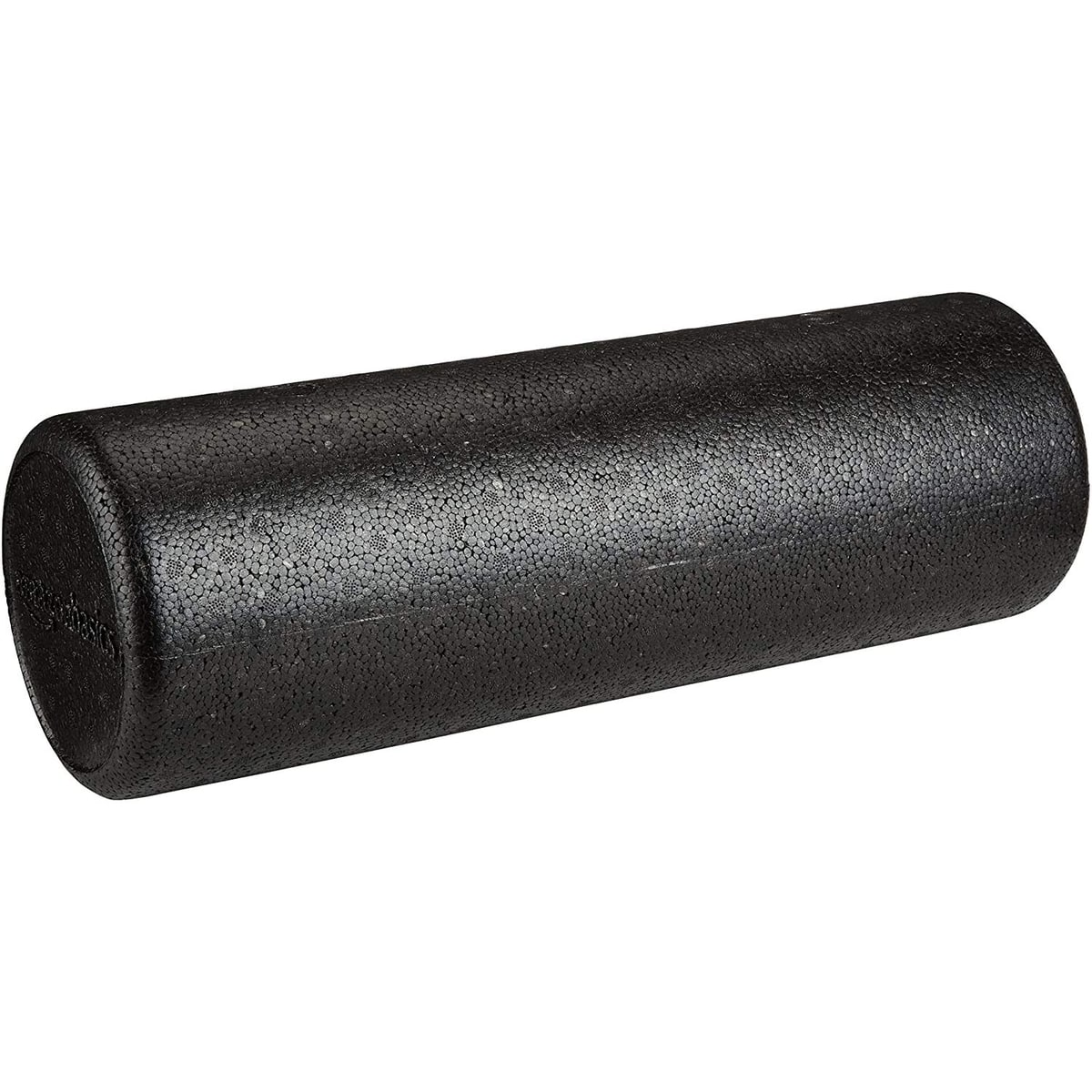
Amazon Basics says one thing about firmness and says it five times. Title, bullet 1, bullet 3, the firmness field and the icon row in the artwork all agree, and three of them name the polymer, which is more than the GRID listing manages. The problem is that high density is a word without a scale attached to it. This listing offers nothing softer and nothing firmer to compare against, so the phrase has nothing to sit against and you are left guessing what it will feel like. If you have already decided you want a plain firm cylinder at 18 inches, the missing range does not matter.

Pros
Five surfaces mention firmness and all five say the same thing: high density in the title and bullet 1, firm in bullet 3, firm in the firmness field, and maintains firmness in the artwork
Names the polymer three times, polypropylene, in bullet 3, in the material field and in the artwork
The artwork carries a dimensioned drawing, 18 inches long and 6 across
Cons
No range on the listing to place it in, so high density is an adjective with nothing there to measure it against
The artwork disagrees with itself: one banner prints 17.75 by 5.75 by 5.75 where the drawing beside it, bullet 6 and the spec field all say 18 by 6 by 6
Nothing on the title, the bullets or the spec fields ties that firmness to a kind of user
Where to buy
Amazon
Check Price
We may earn a commission from this link.
#5
TriggerPoint GRID 1.0 Foam Roller, 13 Inch
Zoom
TriggerPoint

TriggerPoint GRID 1.0 Foam Roller, 13 Inch

7.6/10JellyReviews Score

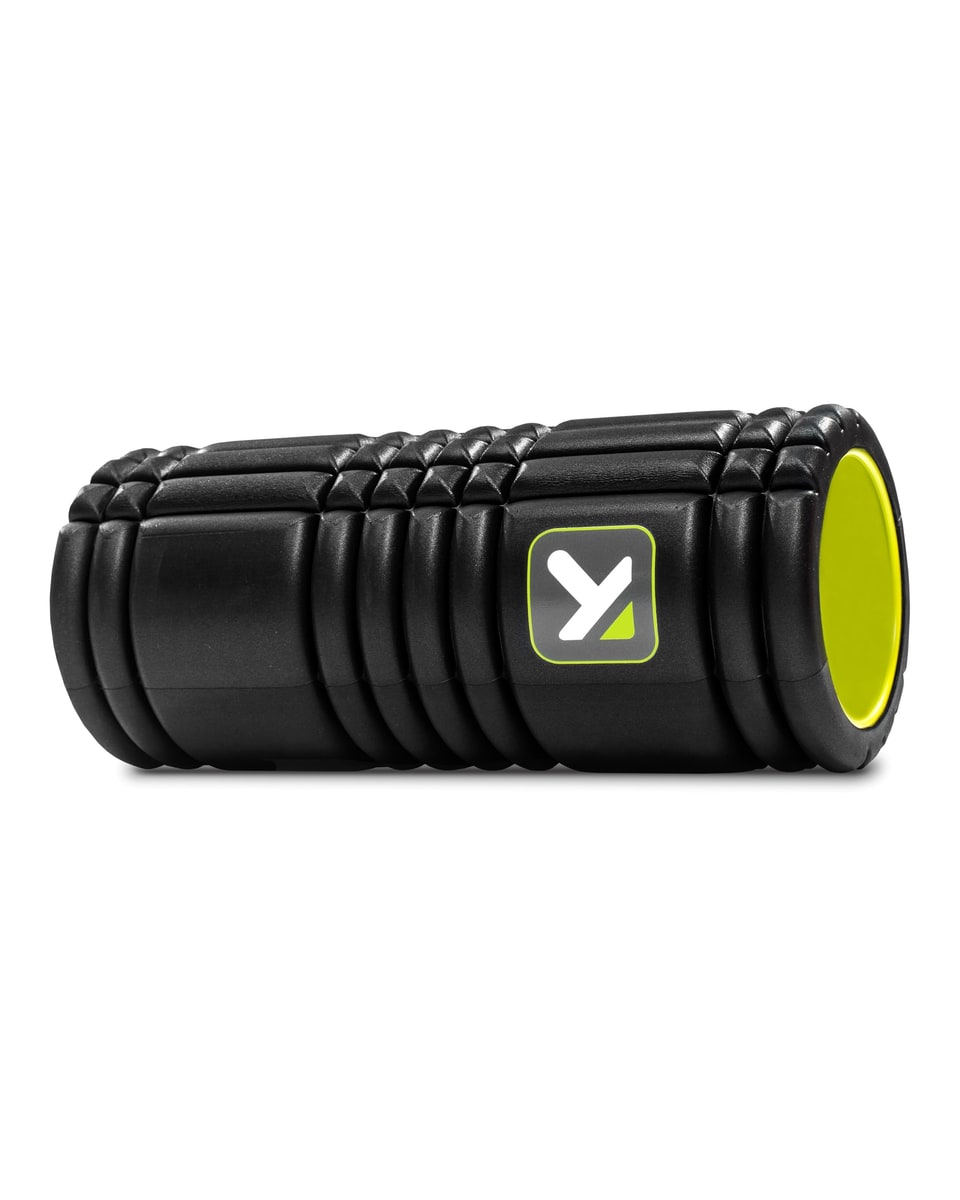
The GRID is the roller most people picture, and it is the hardest of these five to buy on firmness. Its copy describes a pattern rather than a level: multi-density, proprietary Distrodensity Zones, firm compression, firmer than traditional rollers. None of that tells you where this sits against anything, because TriggerPoint sells no softer or firmer version on this listing. The A+ copy is the best part of it, answering the load, the dimensions and the weight outright, and then the spec field disagrees with the A+ on both the dimensions and the weight.

Pros
The A+ copy answers three questions outright, a 500 lb load, 5.5 by 13 by 5.5 inches and a weight, and the spec field on the same listing then contradicts two of them
Five of its seven bullets describe the roller, with the hollow core named as the reason it is firmer
Firmness varies across one roller here, in a pattern the maker calls multi-density, where Rollga, Yes4All and RumbleRoller each make you pick a firmness by picking a model
Cons
No range on the listing to place it in: firm compression and firmer than traditional rollers are the strongest statements, and there is nothing on the listing to measure either against
The spec field gives 3.94 by 5.12 by 5.12 inches with a 13 inch diameter, which cannot describe one object and disagrees with the maker's own A+ copy
The spec field also puts the weight at 0.5 kg where the A+ copy on the same listing says 1.4 lb
Two of the seven bullets read Foam and Imported, and two of the three size options are packs of six
Where to buy
Amazon
Check Price
We may earn a commission from this link.
§ 02 · Side-by-side comparison

Compare all 5 at a glance

RankProductBrandScoreBest for
#1Rollga LITE Foam Roller, 18 InchRollga9.1THREE FIRMNESS LEVELS
#2Yes4All EPP Foam Roller, 36 InchYes4All8.9EPP, ITS FIRMEST GRADE
#3RumbleRoller Original, Midsize 22 InchRumbleRoller8.5THE SOFTER OF TWO
#4Amazon Basics High-Density Foam Roller, 18 InchAmazon Basics8.1-
#5TriggerPoint GRID 1.0 Foam Roller, 13 InchTriggerPoint7.6-
§ 03 · Buying guide

How to choose the right foam roller

01Density is the word this category sells and the number nobody prints

Every roller on this page is described with a firmness adjective and not one of them carries a density figure. None of the five states a value in kilograms per cubic meter, in pounds per cubic foot, or as a Shore hardness number.

That makes high density a phrase rather than a measurement, and the three listings here that use it do not use it the same way. Rollga applies it to the foam in all three of its levels, including the softest. Yes4All applies it to the EPP, which is the firmest of its three grades. Amazon Basics applies it to a polypropylene it sells in no range at all.

What you can use instead is a maker's own range. Rollga names three levels, Yes4All names three material grades, RumbleRoller names two. Inside a range the words mean something, because the maker has committed to an order.

02Length decides what you can reach

Two of these listings say what each of their lengths is for. Yes4All covers four: 12 inches for traveling and one area at a time, 18 inches for back and hamstrings, 24 inches for control across several muscle groups, 36 inches for larger areas and full-body support. RumbleRoller covers three in a single bullet: compact for targeted work and travel, midsize for versatile full-body use, full size for larger muscle groups.

The other three listings sell one length each and say nothing about choosing between lengths at all.

Diameter is stated less often and less carefully. Amazon Basics and Yes4All both carry a diameter field reading 6 inches. Rollga has no diameter field, and its 6 has to be read out of an 18 by 6 by 6 dimensions string. The GRID gives 5.5 in its A+ copy and again in a gallery drawing while its diameter field says 13, and RumbleRoller gives 5.5 in its A+ copy while its diameter field says 22.

03Smooth, bumpy or contoured

A smooth cylinder spreads your weight along whatever it touches. Amazon Basics and Yes4All are the two here with nothing patterned on the surface, and Yes4All's own bullet calls it a round roller.

A bumpy roller concentrates the same weight onto a smaller area. RumbleRoller publishes a cross-section drawing of the idea and sells two firmnesses of it, and the blue Original is the gentler.

A contoured roller is cut away where you do not want pressure. Rollga is shaped in waves so the grooves clear the spine, which is a different goal from reaching deeper.

The GRID sits between the first two: a hollow core wrapped in ridges and nodules, in a pattern the maker calls multi-density, so the pressure changes depending on which part of the roller you use.

Shape and firmness are separate choices. Both makers here who say who their levels suit, Rollga and Yes4All, point new users at their softer end whatever the shape.

§ 04 · FAQ

Questions about foam rollers

On their own, nothing you can compare. None of the five publishes a density figure, so the words only carry meaning inside one maker's range. Rollga calls its foam high density on all three of its levels, including the softest. Yes4All calls its EPP high density and that grade is the firmest of its three. Amazon Basics calls its polypropylene high density and sells it in no range at all. The same phrase does three different jobs on three listings, which is why this page ranks on whether the listing places the product in a range rather than on the adjective itself.

In a structured field called Item Firmness Description. All five listings here carry one: Extra Firm for the GRID, Firm for Amazon Basics and Yes4All, Medium for RumbleRoller and Rollga. It is worth finding, because on one of the five it disagrees with the rest of the listing. That one is Yes4All, whose field reads Firm while the title, the A+ copy and the maker's own gallery ladder all put this roller in the extra firm grade, and Firm is the name that ladder gives the grade below it.

It is more intense, which is not the same thing. Yes4All says its extra firm grade is hard at first and aims it at athletes, and points beginners at its medium firm grade instead. Rollga sends anyone sensitive to touch to its softest level. Those are the two makers here who commit to an answer, and both of them point new users down rather than up.

None of these five publishes an expected lifespan, so a number of years attached to one is somebody's guess. What one of them publishes is a term: the Yes4All listing carries a 30-day return and a one-year limited warranty, and it is the only warranty field of the five. Two of the others claim shape retention with no duration behind it. Amazon Basics says its polypropylene maintains shape, and TriggerPoint says its EVA foam maintains its shape without breaking even after repeated use.

The images footnote them to two published papers, Cheatham and colleagues in 2015 and MacDonald and colleagues in 2014. Both footnotes cite the study and stop there: neither says the study used a Rollga. So read the percentages as context for foam rolling as a practice. Read them as a result for this roller against another one and they are doing work the footnotes do not support.

The verdict

Rollga takes the top place because its gallery is the only decision tree on these five listings: three levels, a use case for each, and a sentence placing this one in that range at 20 percent softer than the standard. Yes4All does nearly as much, grading three materials and saying who each suits, and it loses the place on its own firmness field, which names a different rung of its own ladder than every other surface does. RumbleRoller names two levels and explains neither. Amazon Basics says one thing five times and gives you no range to read it against. The GRID places itself in no range at all, and the spec field on that listing then disagrees with its own A+ copy on both the dimensions and the weight.

This page contains affiliate links. We may earn a commission when you click through and make a purchase. This never affects our rankings. Read full disclosure →